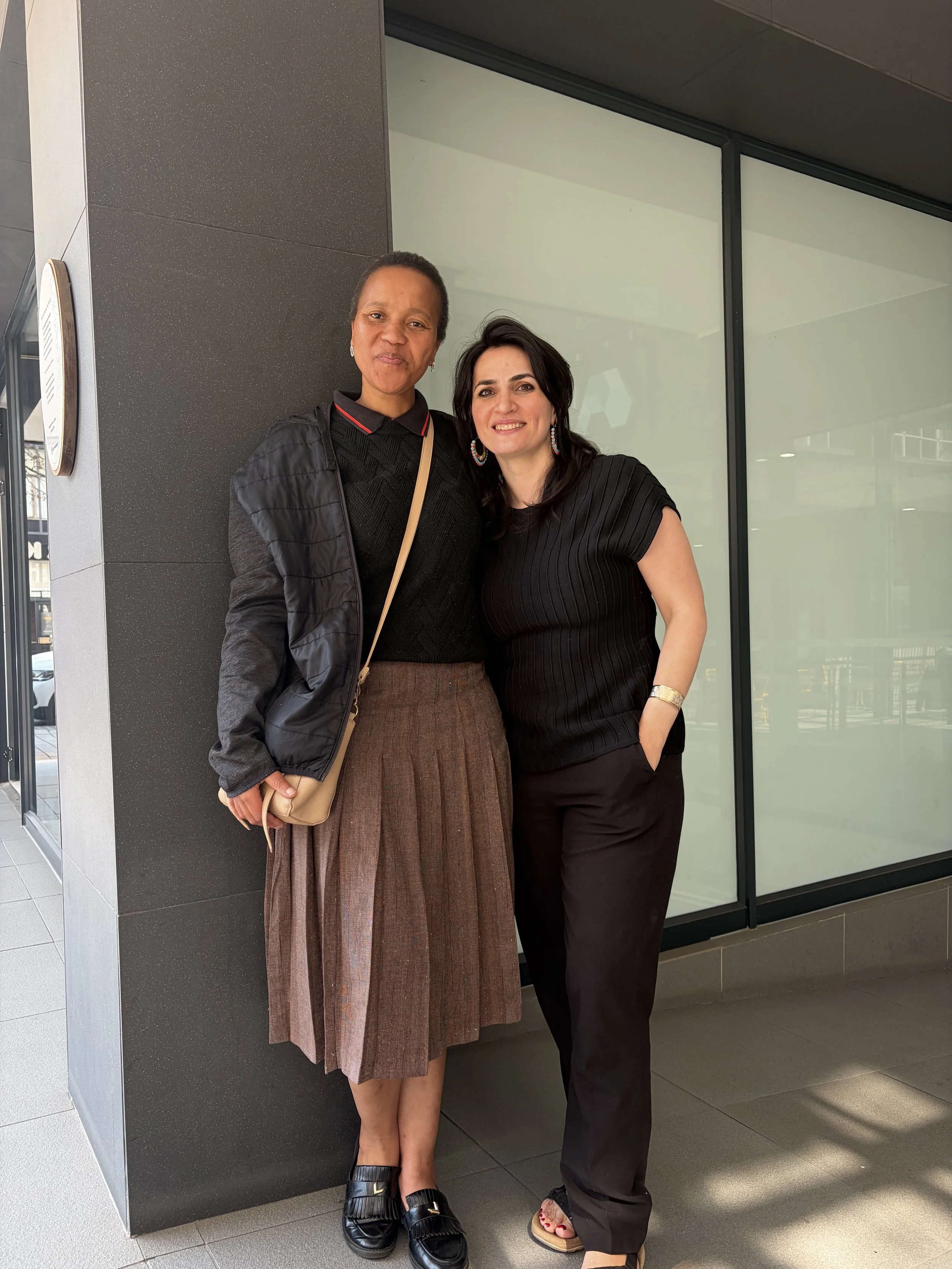
Technical Advisor Reflection: Zeinab Farokhi
Rooftops Canada Technical Advisor Zeinab Farokhi was in South Africa working with our partner, the Socio-Economic Rights Institute (SERI), on research and advocacy for women's land and housing rights. She worked with SERI staff and local partners to support joint research, contributing to gender analyses for upcoming working papers and other publications. Zeinab shared her key findings with us, offering insight into what she learned and the important research taking place to advance women’s land and housing rights.
My work with SERI’s Women’s Spaces project focused primarily on two areas: research on sales in execution and analysis of the Community Advice Office workshops on women and property law.
The first area of work involved continuing research on the sale in execution of residential property. This included reviewing the legal and practical process through which homeowners may lose their homes because of mortgage debt, conducting interviews with legal practitioners, analysing the information gathered through the interviews, conducting a review of literature, and developing a written research report.
The second area involved reviewing and analysing the questions and discussions that emerged from SERI’s Community Advice Office workshops. This work resulted in a findings report on women and property law, which identifies the main legal issues raised by participants and develops recommendations for future legal education and support.
One of the main lessons from my time with SERI was the importance of examining the gap between legal protections on paper and how those protections operate in practice. The interviews were particularly valuable in identifying practical questions that are not always visible from legislation and case law alone. They helped identify issues relating to communication, understanding, timing, access to assistance and the consequences of the process for people who remain in their homes after a sale. At the same time, the research highlighted the need to distinguish between what the available evidence demonstrates and what still needs to be investigated. In particular, the question of who is most affected by sales in execution requires further evidence. This is important for developing a gender-responsive analysis that is based on evidence.
Another lesson was the importance of translating complex legal issues into accessible language. Both areas of work involved legal concepts and processes that can be difficult to understand. Producing research that can support advocacy and community legal education therefore requires maintaining legal accuracy while explaining the issues in a clear and practical way.