

Build affordability in by design
In Denmark, affordability is built in from the start through decisions about how housing is designed, financed, and managed.
One example is the National Building Fund, which helps finance the development and renewal of social housing. By pooling resources and reinvesting in the housing system over time, it helps non-profit housing providers meet major repair and maintenance needs while preserving affordable homes for the future.
The system is complex and has evolved over many years, but the underlying lesson is that affordable housing must be intentional. It requires reliable funding, long-term planning, and structures designed to support affordability over time.
Be ready to adapt
Denmark is facing many of the same challenges we see in Canada and around the world: growing housing need, rising costs, rapid urbanization, and the impacts of the financialization of housing.
Denmark’s experience highlights some of the complexities of housing policy. Efforts to address concentrations of social and economic vulnerability have sparked debate and legal challenges over discrimination. These experiences raise important questions about how housing systems can respond to changing needs while respecting the rights, identities and dignity of everyone in a community - questions we are also grappling with in our own way in Canada and through Rooftops Canada’s work with our international partners.
Bringing the lessons home
Denmark’s social housing system has developed in its own historical, political, and social context. For me, the value of learning from it is in coming home with sharper questions about the choices we make, the systems we build, and the people they are meant to serve.
Housing challenges are shaped by both local and global forces. Affordability, inadequate supply, climate change, rapid urbanization, and the financialization of housing are interconnected challenges. Learning from other countries helps us better understand these shared challenges, learn from successes and setbacks, and explore solutions suited to our own context.
At a time when housing insecurity is deepening around the world, and multilateral institutions and human rights frameworks face growing pressure, trusted partnerships across civil society are essential.
At Rooftops Canada our commitment to housing as a human right takes many forms. It includes working alongside local partners to support housing solutions rooted in community needs, while advocating for the recognition and realization of housing rights in international forums, including the United Nations. Local experience informs global discussions, while international housing and human rights frameworks help strengthen advocacy and support change at a community scale.
By learning from Denmark and continuing to exchange ideas with our Canadian and International partners, Rooftops Canada can help advance locally grounded solutions and a shared belief that everyone deserves a safe and secure place to call home.
Thank you to CHRA and CIH Canada for creating this opportunity to learn, exchange ideas, and be inspired. Thank you also to my fellow participants. I’m grateful for the opportunity to spend time with such brilliant (and fun!) housing colleagues from across Canada.
A very special thank you to the Danish social housing professionals and residents who welcomed us so warmly, and especially to the residents who opened their homes to us, giving us a small glimpse into what the system means in people’s everyday lives.
What does housing say about the society we want?
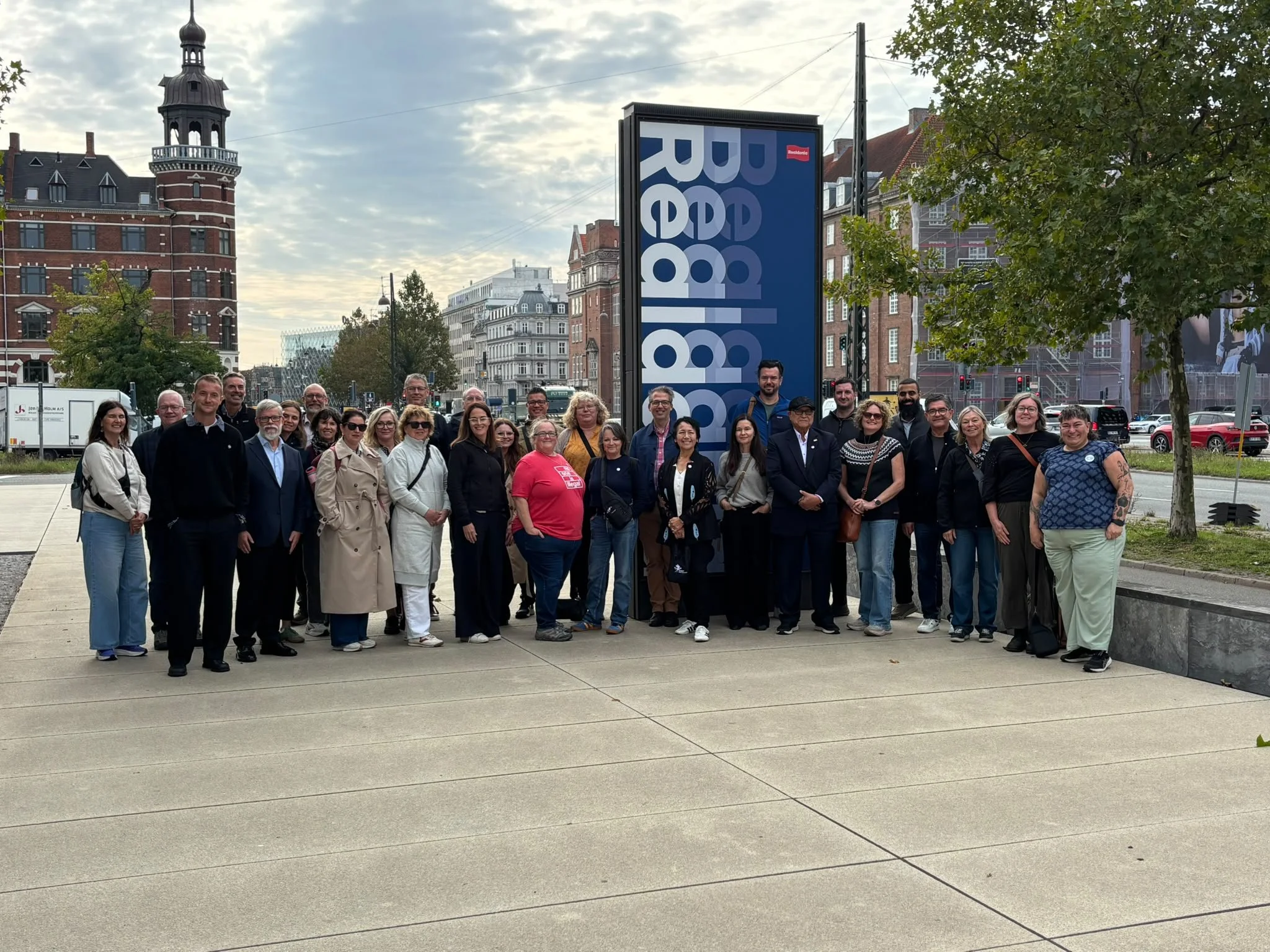
Rooftops Canada’s CEO Genevieve Drouin recently spent a week in Copenhagen, Denmark exploring this question as part of a study tour organized by the Canadian Housing and Renewal Association (CHRA) and the Chartered Institute of Housing Canada (CIH Canada), from September 28 to October 2, 2026.
Nearly 20% of dwellings in Denmark are part of its social housing system. What stood out to me wasn’t just the scale of the system, but the people and choices behind it.
The visit left me reflecting on four key lessons:
Housing is a collective responsibility
We heard a strong sense of pride in Denmark’s commitment to a more equitable society, with quality public services and a social safety net the people can rely on. There is also broad support for investing collectively in these systems.
It was a reminder that housing systems don’t exist in isolation. The choices we make about housing reflect what we value as a society and how we believe we should care for one another.
Put people first
As housing economist Curt Liliegreen of Realdania explained, the primary purpose of Denmark’s social housing legislation is to protect people who are vulnerable, rather than optimize market efficiency.
We saw what that looks like in practice. In one building, shared community space was built into every floor, rather than using that space to maximize the number of units. This was a deliberate choice to make room for connection and improve quality of life.
Residents also play an active role managing their housing and making decisions about their communities. This resident-led democratic approach was described as a defining feature of Denmark’s social housing system. It recognizes that a good home is about more that the building itself. It’s also about having a voice, building relationships, and belonging.