

Safe Space in the City: How Johannesburg’s Women’s Desk is Tackling Gendered Housing Challenges
Women living in Johannesburg’s inner city continue to face inequality, violence, and exclusion in ways that are often overlooked in housing struggles and community advocacy. While the Inner-City Federation (ICF) has long supported residents facing evictions, service disconnections, and unlawful occupation, gender-specific challenges had not been addressed in a structured way. Through ongoing consultations and casework, it became clear that women often experience violence in their homes, discriminatory treatment during evictions, and difficulty accessing support systems.
In response to these needs, the Women’s Desk was established with support from the Women’s Spaces project. Since June 2025, the Desk has offered a dedicated space where women can raise concerns, access tailored support, and connect with resources. Led by Freedah Motshwane and Thobile Zondo, who bring both lived experience and specialized training, the Desk is steadily becoming a trusted avenue for women navigating housing challenges in Johannesburg’s inner city.
What impact does the Women's Desk have?
Workshops and Community Education
Since June, the Desk has run five workshops across Hillbrow, Berea, Yeoville, Mayfair and the CBD. These sessions introduced the Desk to residents and provided popular education on topics including cohabitation, types of marriages, divorce, intestate and testate succession, evictions, and the impact of gender-based violence on women’s property rights. Workshops have included distribution of posters to increase awareness of the Desk’s services and strengthened women’s knowledge on their rights across the topics above.
Referral System
A structured referral system is being built. Although not yet fully established, the Women’s Desk is cultivating working relationships with key stakeholders that enable provisional referrals when required. The Desk most frequently engages with social workers at inner-city police stations, station commanders, control prosecutors, and detectives. These contacts have allowed the Desk to escalate cases beyond its immediate capacity and to follow up on client needs while the formal referral system continues to be developed.
Community Outreach and Visibility
Through advocacy by Freedah and Thobile (the Desk’s full-time staff), workshops, and outreach materials, the Desk’s visibility has increased. Residents now approach the Desk for assistance with domestic disputes, counselling referrals, and other gender issues. The Desk’s growing presence has contributed to an emerging reputation as a place women can come to for a safe and secure consult.
Professional Development
The work has also empowered Freedah and Thobile. Their knowledge of women’s rights, confidence in consultations, and ability to navigate delicate cases have all strengthened since the Desk started.
The Women’s Desk is already making a meaningful difference in Johannesburg’s inner city by providing a safe, trusted space for women to seek support, learn about their rights, and access services. Beyond helping residents, it is building stronger connections within the community and empowering staff to lead with confidence. As the Desk continues to grow, it stands as a powerful example of how targeted, women-led initiatives can transform housing advocacy and strengthen communities.
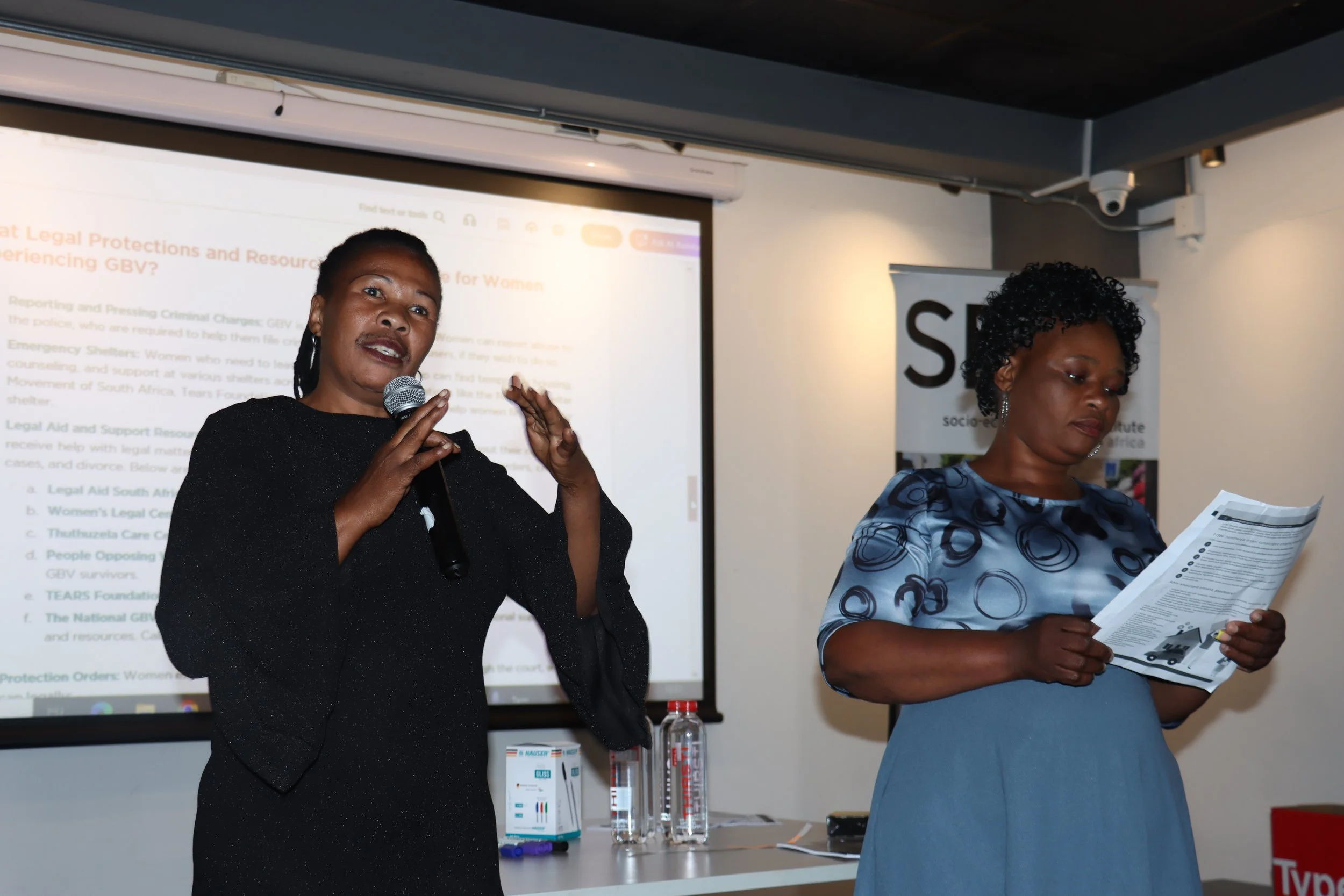
Freedah Motshwane and Thobile Zondo