

Technical Advisor Reflections: Andrea Adams
Andrea Adams is the Executive Director of St. Clare’s Housing, a social justice landlord and developer working in active partnerships to created sustainable, safe, and affordable housing solutions in Toronto, Canada.
She spent two weeks working with and learning from Shelter and Settlements Alternatives Uganda in November 2025, as part of the global experience sharing and co-learning component of Rooftops Canada’s Women’s Spaces project.
Between November 1 and November 15, my assignment, shared with two other women from Canada, Jaclyn Johnston (Program Manager, CHF Canada) and Alia Abaya (CEO, Circle Community LandTrust), was to engage with the Shelter and Settlements Alternatives staff in Kampala and the surrounding area to learn about the work being done to improve housing conditions and opportunities in Uganda.
During our time there, we were given a brief overview of the Ugandan context of various types of land tenure and history, and then travelled to several sites, including Kayunga, Iganga, Bujuuko, Mityana, and Entebbe.
At those sites, and during the travel to and from the sites, we learned of a variety of initiatives being taken. I was struck by how intertwined they were, and how they related to housing. It became clear to me that, while many of the activities did not at first appear directly related to housing, the intent to develop housing cannot proceed in Uganda without simultaneously scaffolding the conditions in which development can take place.
Examples of these initiatives are
The paralegal program, required so that Ugandans in need of housing can be educated on their economic and land rights AND be able to apply them efficiently within a low income/admin support environment
Social enterprises activities, required so that small scale economic activities can be seeded, creating economic conditions required to participate in housing initiatives
Savings circles, required to pool resources, ensuring targeted and efficient use of funds for the benefit of members and their communities.
The incorporation of housing co-ops provides a clear legal structure for developing housing, without having to start from scratch.
Construction skills, required to lower the cost of construction
Formal registration of land ownership
It should be noted that all of these activities have specific purposes, but each also builds engagement, self-determination, confidence, trust in outside help, and patterns of cooperation required in a context in which the government is not providing structure or guidelines.
It was helpful that each of the Technical Advisors was skilled in a different sector of Canadian housing: Co-operatives, land trusts, and non-profit. The perspectives of these sectors are different, but not mutually exclusive. In Uganda, the gathering of the divergence of perspectives focused on a common outcome is unique and exciting.
SSA has a clear and deep understanding of the circumstances of people living in informal settlements. Their approach to problem solving has been respectful, thoughtful, and consultative, and meets their target audience where they are. The multiple programs encourage, scaffold, and reinforce one another in meaningful ways to create an environment in which housing can be successful, healthy, and equitable. It is remarkable, there is clearly a lot of trust that has been built with the communities they interact with, and a lot of hope and opportunity created that has far-reaching effects.

Jaclyn Johnston (Program Manager, CHF Canada), Andrea Adams (Executive Director, St. Clare’s), and Alia Abaya (CEO, Circle Community LandTrust)
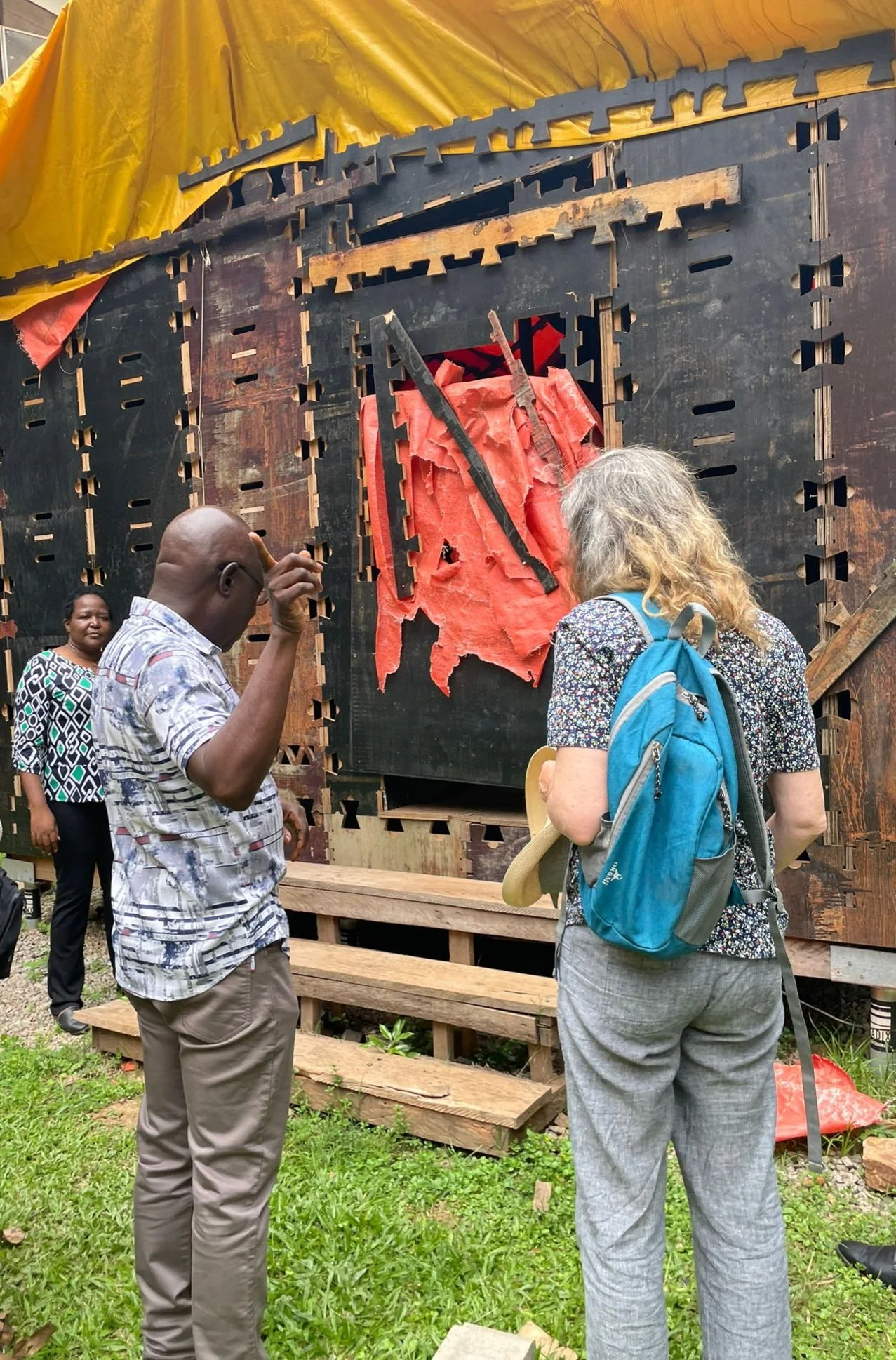
Andrea being shown new building material for housing solutions at Makerere University