

Rooftops Canada at the World Urban Forum 13
Rooftops Canada participated in the World Urban Forum 13 (WUF13) in Baku, Azerbaijan, the world’s leading global gathering on the future of cities. Bringing together more than 40,000 participants from 182 countries, WUF13 provided an important space for dialogue, collaboration, and action on one of the defining challenges of our time, and this year’s theme: Housing the World. From May 17-22, we joined changemakers from around the world to build solutions for more inclusive, resilient, and sustainable cities.
Rooftops Canada hosted four sessions highlighting the power of community-led partnerships in advancing inclusive land and housing tenure security and urban development, with a focus on sharing the impact of the Women’s Spaces project (2022–2027), being implemented in Angola, Kenya, South Africa, and Uganda, in partnership with the Government of Canada. Across each session, a clear message emerged: housing is not only a human right, but the foundation for inclusive and sustainable development. Without secure housing, progress on economic growth, gender equality, and climate resilience becomes far more difficult to achieve.
Rooftops Canada’s first session at the Canada Pavilion, The Foundation for Prosperity: Secure Housing as a Catalyst for Economic Growth and Social Inclusion, explored how secure housing can drive both economic growth and social inclusion. Drawing on international experiences and Canada’s evolving role in global housing policy, the session also explored how domestic and international priorities can be better aligned to advance housing rights globally.
Hosted in partnership with Housing, Infrastructure and Communities Canada (HICC), the Canada Mortgage and Housing Corporation (CMHC), and UN-Habitat Canada, along with Canadian academic and civil society partners, the Canada Pavilion served as a vibrant and collaborative hub. It brought together practitioners and leaders working across diverse housing challenges — from homelessness and climate resilience to housing policy and community land trusts. Across the many discussions held at the Pavilion, it was clear that Canadian organizations have an important role to play in advancing innovative, community-driven solutions and strengthening global leadership on housing and urban development.
Rooftops Canada also hosted the following roundtable and networking sessions:
Scalable Solutions for Securing Women’s Land and Housing Rights, in collaboration with the Habitat International Coalition (HIC), highlighted the impacts of the Women’s Spaces project and its contributions to advancing women’s equitable rights to and control over land, housing, and livelihoods in urban contexts.
Financing Housing in a Shifting Funding Environment, in collaboration with the World Bank, the Government of France, UN-Habitat Canada, urbaMonde, Habitat for Humanity International, and Shelter and Settlements Alternatives, analyzed global housing finance trends, exploring opportunities and constraints in an evolving funding landscape, and highlighting innovative approaches that make housing finance more equitable, resilient, and locally driven.
Reflecting on WUF13, Rooftops Canada’s Program Manager, Efemena Ozugha, shared: “What WUF13 reaffirmed for me is that civil society-led, partnership-based development works. The Women’s Spaces Project is proof of this, alongside many other models highlighted throughout the Forum. When Canada invests in scalable approaches, it helps set a standard for what principled human rights protection, climate leadership, urban justice, and people-centred international development can and should achieve.”
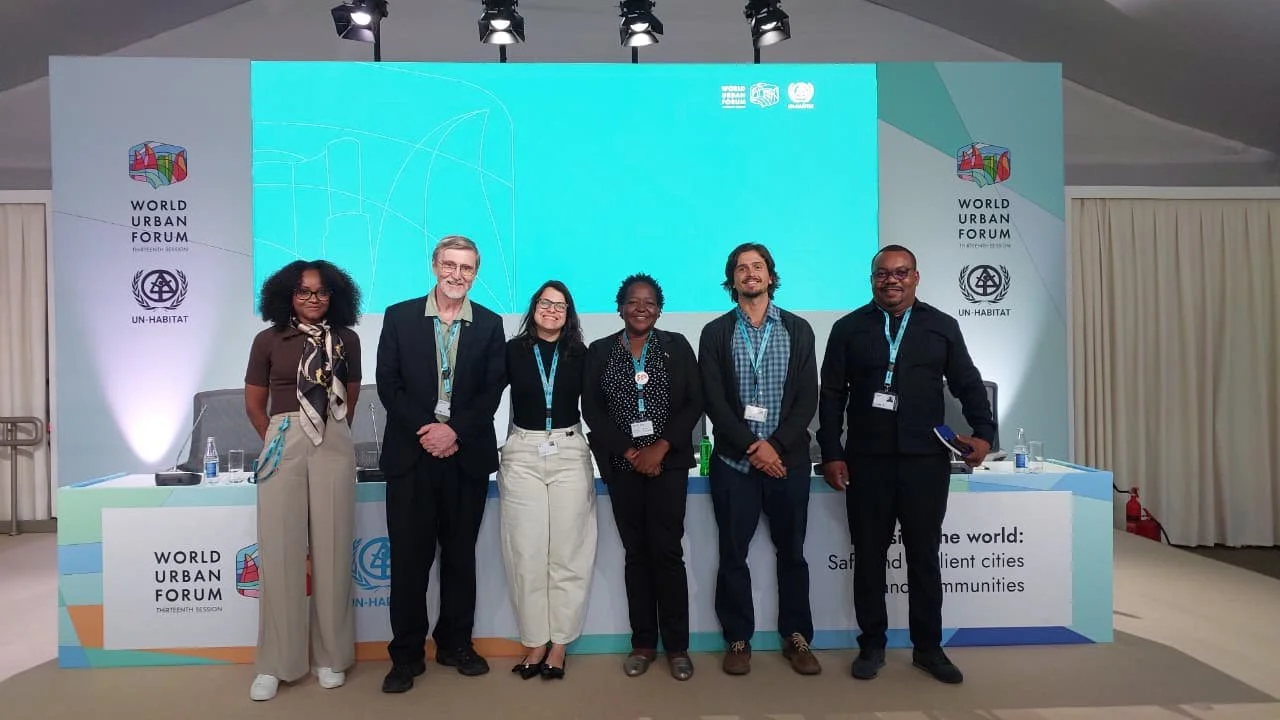
Efemena Ozugha (Program Manager, Rooftops Canada), Allan Cain (Director, Development Workshop, Dorothy Baziwe (Executive Director, SSA Uganda), Moises Festo ( Program Manager, Development Workshop)
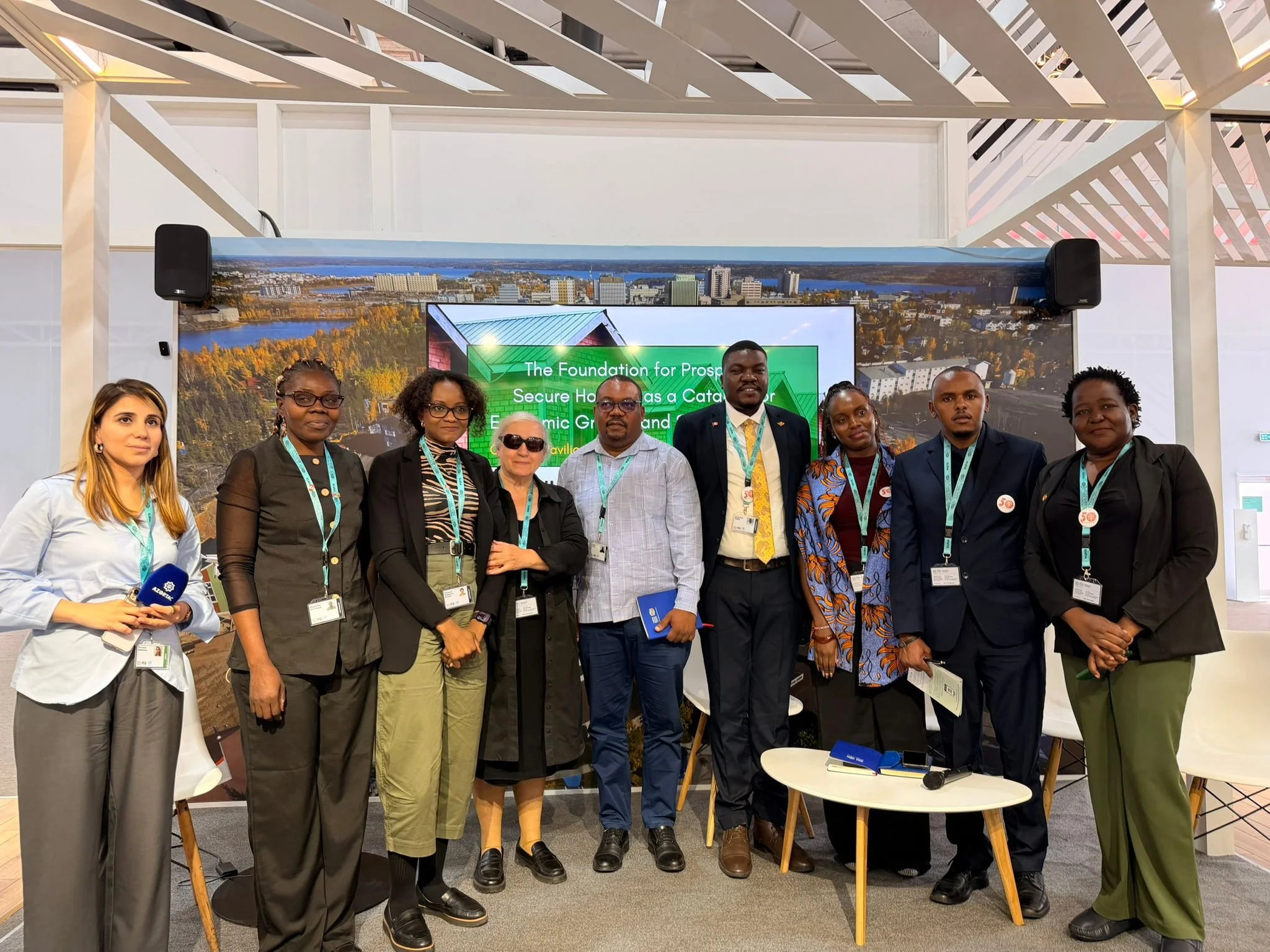
Efemena Ozugha (Program Manager, Rooftops Canada), Moises Festo ( Program Manager, Development Workshop), Brian Odella (Project Manager, Shelter and Settlements Alternatives Uganda), Samuel Ikua (Project Manager, Mazingira Institute), Dorothy Baziwe (Executive Director, Shelter and Settlements Alternatives Uganda)