

Empowering Communities Through Housing:
Jaclyn Johnston’s Reflections on Her Technical Advisor Experience in Uganda
By Jaclyn Johnston, Program Manager of Co-operative and Planning Services (Atlantic) with CHF Canada.
In November 2025, I had the opportunity of serving as a Technical Advisor under the Women’s Spaces project with Shelter and Settlements Alternatives (SSA) in Uganda. This experience was more than a professional assignment, it was a journey of learning alongside communities for whom housing is not just shelter but a symbol of dignity, security, and hope.
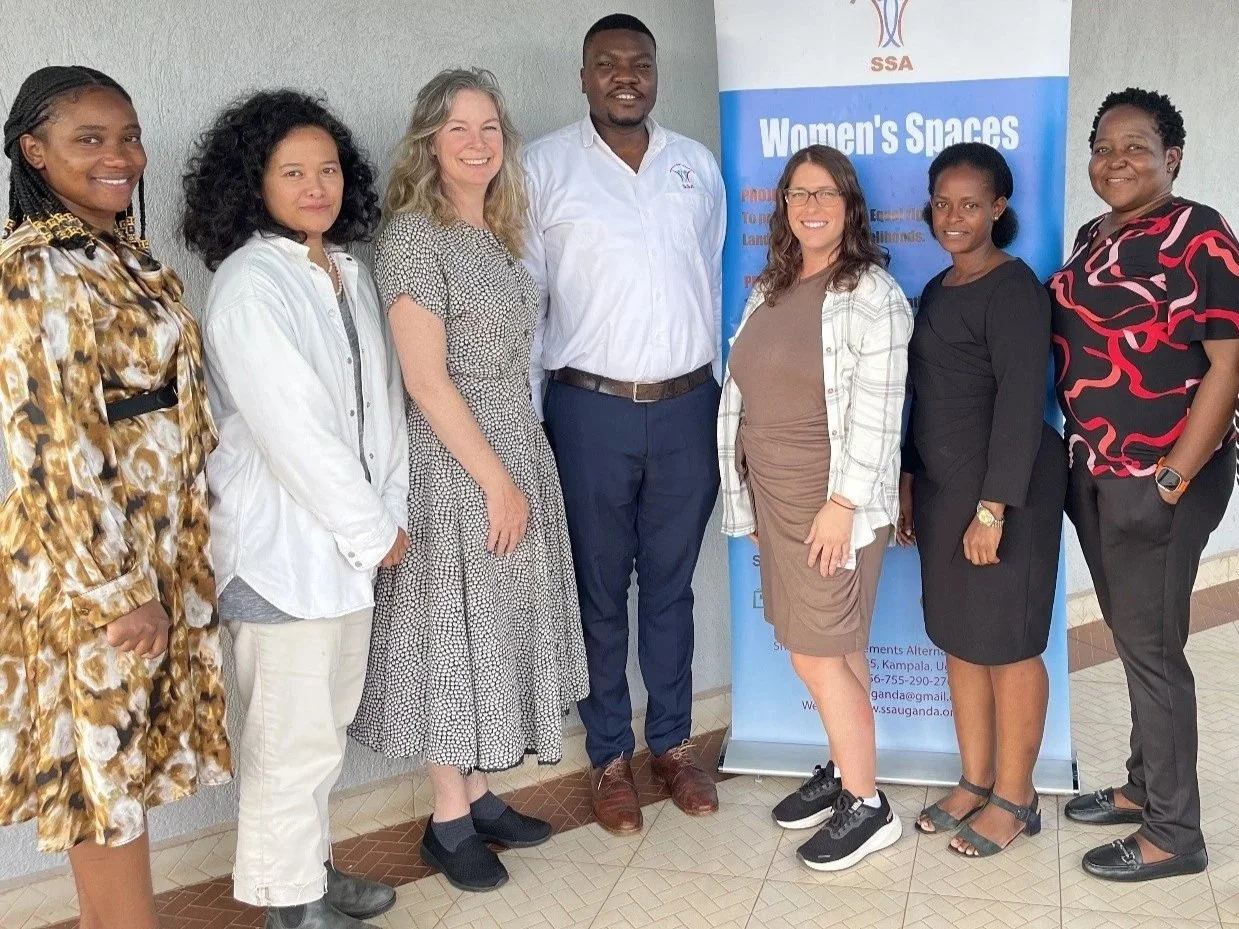
From left to right, Victoria (Accountant, SSA), Alia Abaya (CEO, Circle Community LandTrust), Andrea Adams (Executive Director, St. Clare’s), Brian Odella (Programs Officer), Jaclyn Johnston (Program Manager, CHF Canada), Precious Amumpaire (Program Assistant), Dorothy Baziwe (Executive Director, SSA).
Personal Reflection and Key Takeaways
The most profound theme that emerged during my time in Uganda was empowerment. Every conversation from women saving for bricks to paralegals mediating land disputes underscored the resilience and creativity of communities striving for better futures. These were not passive beneficiaries; they were active architects of change.
I witnessed firsthand how legal empowerment and cooperative action transform lives. The Women’s Spaces project, administered by SSA, included a paralegal program. This paralegal program stood out as a cornerstone of this approach. Paralegals, trained from within their communities, bridge the gap between formal legal systems and marginalized households. Their work goes beyond resolving disputes, they challenge harmful norms, promote women’s property rights, and lead savings circles that fund education and housing improvements. This dual role of advocate and economic facilitator is a powerful model for grassroots justice.
Another key takeaway was the power of collective savings and governance. The savings circles were not just about saving together, it was about sharing hopes and dreams of more security for future generations, creating spaces for social connection, and building a community that supports one another. Governance was not simply a technical exercise; it was a process of building trust, leadership, and systems that will sustain these communities for years to come.
In Bujuuko, women affected by HIV pooled resources to provide a down payment to build twenty-four homes. The homes stand as a testament to solidarity and innovation. Similarly, in Galima, women have organized a housing cooperative that has been saving diligently and purchased land. They plan to build environmentally friendly homes using interlocking soil blocks. These stories illustrate that sustainable housing solutions begin with community-led initiatives supported by strong governance and financial literacy.
Why This Matters
Housing is deeply cultural in Uganda. It reflects identity, heritage, and community pride. Sustainable solutions must honor these traditions while embracing progress. My experience reaffirmed that housing is not just about bricks and mortar, it is about building capacity, trust, and hope.
As I return to Canada, I bring with me the echoes of women’s words—not only about securing land and living without fear, but also about building their own incomes through sharing resources and finding a stronger voice to fight for their rights. These stories remind me that housing is inseparable from livelihoods, empowerment, and dignity.
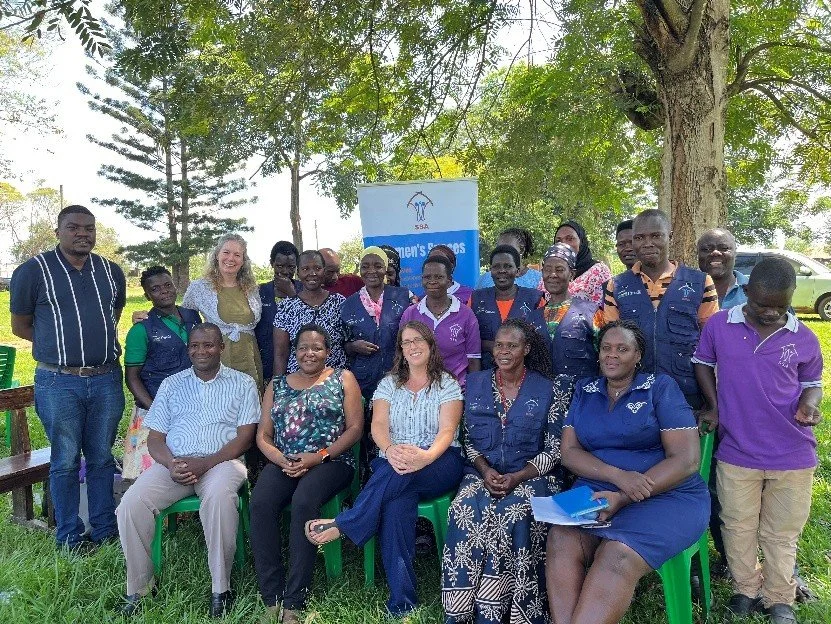
Jaclyn Johnston, Andrea Adams, and SSA staff with Kayunga municipality paralegals.
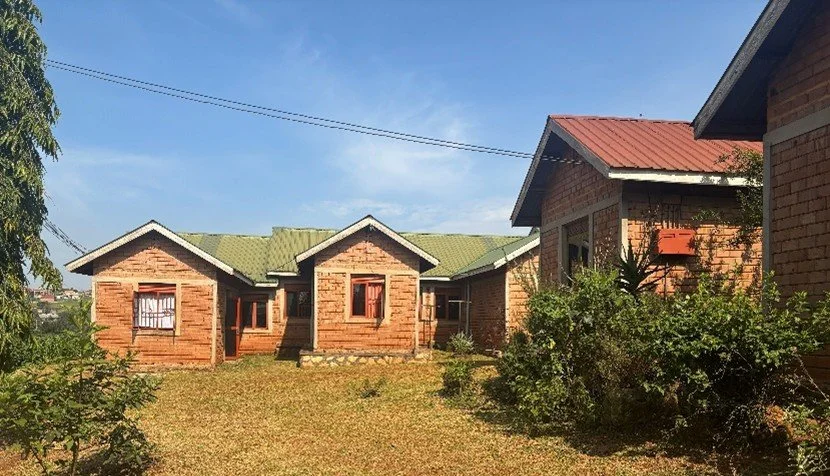
Kwefako Housing Cooperative, a SSA supported co-op housing project in Bujjuko.
Challenges and Opportunities
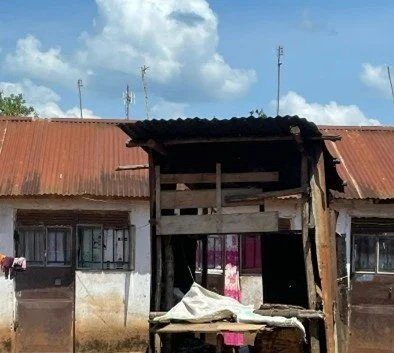
Uganda faces a housing deficit of more than 2.4 million units—a challenge so vast it feels overwhelming. Families live in fragile structures on insecure lands, often without access to basic services. Yet, amid these challenges, sparks of hope shine through. SSA is interested in creating stronger model’s, including hybrid models that combine co-operatives with land trusts, integrated site-and-service approaches, and capacity-building programs that can reshape the housing landscape.
However, systemic barriers remain: weak policy enforcement, high interest rates, and cultural norms that resist change. Addressing these requires advocacy, innovation, and partnerships. SSA’s efforts to amend co-operative bylaws, promote financial systems like revolving funds, and pilot modular housing prototypes are steps in the right direction.
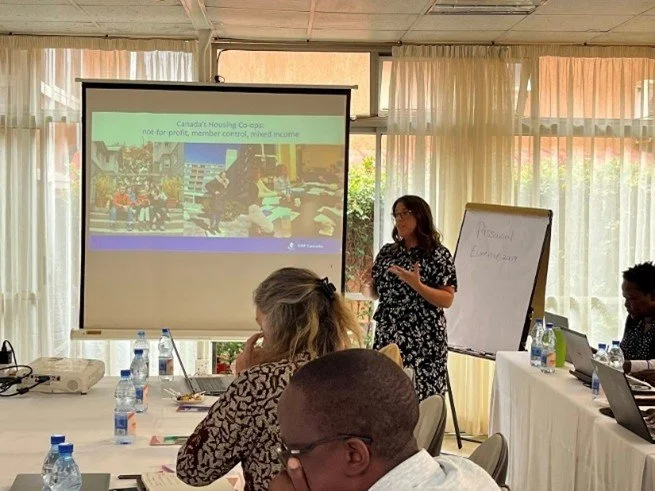
Jaclyn Johnston presenting during her TA visit with SSA in Uganda.