

Partner Perspectives: Mazingira Institute in Kenya
By Laureen Odero
What are some of the key challenges faced by women and communities in Kenya that the Women Spaces project is designed to address? Why is a project like this needed?
Women in Kenya face complex challenges across social, economic, and political spheres. These include gender-based violence, economic inequality, political barriers, patriarchal norms, cultural practices, and obstacles in education and the workplace.
Gender-based violence remains a serious issue in Kenya, including domestic abuse, sexual assault, and femicide, often committed by spouses or family members. Harmful cultural practices—such as female genital mutilation (FGM), early or forced marriages, and dowry-related violence—further put women at risk. Weak reporting systems, social stigma, and low conviction rates mean many perpetrators go unpunished. Economic inequality limits women’s opportunities. They often earn less than men, face career barriers, and work in lower-paying or informal jobs that restrict access to education and healthcare. Women are underrepresented in leadership and politics, with stereotypes, limited resources, and political intimidation making advancement difficult.
These issues are deeply rooted in patriarchal norms that prioritize male authority and decision-making. Women are often excluded from household and community decisions, and despite progressive gender laws, weak enforcement and resistance to change leave many gaps between policy and daily life.
In the past, Kenyan customs and traditions kept women from owning, inheriting, or controlling land, which usually went to men. Women could use the land but had no ownership or say over it. Although the 2010 Constitution and land reforms now give men and women equal rights to own and inherit land, old practices like inheritance customs still make it hard for women to fully exercise these rights. The Women Spaces project addresses these gender biases through training.
At Mazingira Institute we are implementing the Kenyan component of the Women’s Spaces project, which focuses on promoting gender equality in urban agriculture and food systems in Nairobi. It actively challenges gender bias by equipping young urban farmers with training and gender sensitization that promote equality, confidence, and well-being. This ongoing effort has created a positive, and inclusive environment in Kenyan communities.
The Women Spaces project has been underway for several years now. What have been some of the most meaningful impacts that you’ve seen in the communities you work with?
The Women’s Spaces project has made a lasting impact on our work. Women have gained practical skills in urban agriculture and entrepreneurship, helping them grow more food, improve household nutrition, and earn income. Learning has also expanded and diversified, especially in crop and livestock production and management.
Urban agriculture is a key part of the project, with progress documented through Stories of Change videos, such as the story of Fenny Kerubo. Fenny, a young woman and housewife from Njiru, Nairobi, previously had no source of income. Through training on gender, urban agriculture, and the food system, she gained the skills to grow vegetables and rear rabbits, which she now sells to earn an income. (Learn more about Fenny’s story)
The project has also improved women’s access to financial opportunities through savings groups such as the Women Hub and Youth Hub, helping them invest in their businesses and build financial confidence. Beyond income, the project has created safe and supportive spaces—through training and the hubs—where women can connect, share knowledge, and grow their leadership skills. (Learn more about the Women Hub).
Perhaps most importantly, we have seen growing confidence and participation by women in household decision-making. These changes are contributing to improved livelihoods and a stronger urban food system.
The project collaborates with a range of partners, including government and community groups. Why are these partnerships so important and how have they shaped the project’s impact?
Partnerships are central to the success of the Women Spaces project because they ensure the work is locally grounded, sustainable and aligned with existing systems. By collaborating with government institutions, the project can reach women more effectively and respond to urban farmers’ needs.
The Nairobi City County (NCC) is a key partner of the project in Kenya. This ensures that all changes we are trying to make are formally recognized at the government level. It fosters sustainability and continuity beyond the 5-year project timeline. Working with the NCC has helped align the project with urban agriculture policies, improve access to public spaces, and agricultural extension services. Another key partnership is with TVET (Technical and Vocational Education and Training) institutions, enabling women to gain practical, accredited skills that enhance employability and entrepreneurship.
Together, these partnerships have expanded the project’s reach, strengthened its impact, and created pathways for long-term ownership and scale beyond the life of the project.
There have been three professional exchanges between Kenyan and Canadian urban agriculture specialists - one hosted by Rooftops Canada in Montreal and two hosted by Mazingira Institute in Nairobi. What value do these international exchanges bring to urban agriculture practitioners?
Study visits by Canadian food system specialists to Nairobi have created valuable opportunities for learning and collaboration. During the visit, the Mazingira Institute team exchanged practical knowledge and innovative ideas on urban agriculture. As well as, learning from Canadian initiatives such as the Verdun Edible Neighborhood Development Plan (2022–2030), the Montreal Food Policy Council, community food projects, housing rights, farmers’ co-operatives, and food governance.
The Canadian food system specialists also took away lessons at the governance level and training level, for a transfer of knowledge from the Global South to the North. One member of the study visit, Marie-Eve Ouellette even set up a cone garden in her community garden in Montreal.
These visits strengthened technical skills, informed policy engagements, and expanded professional networks, opening doors for continued collaboration, research, and innovation beyond the visits themselves.
Looking ahead, what do you hope the long-term impact of the Women’s Spaces project will be for the communities involved?
Our hope is the project will change lives, and more women will participate in urban agriculture activities through the knowledge and skills gained during training.
Transformation for the better is our purpose as an Institute. We want to bring positive change for people’s wellbeing and are looking at urban agriculture being more supported in terms of policies and legislative frameworks. Through these policies, women and men will have secure access to public urban spaces for food production.
Equally important is the hope that the Women Spaces project will contribute to lasting shifts in women’s leadership and decision-making at household and community levels. By strengthening women’s confidence, networks, and access to resources, the project lays the foundation for greater participation in local governance.
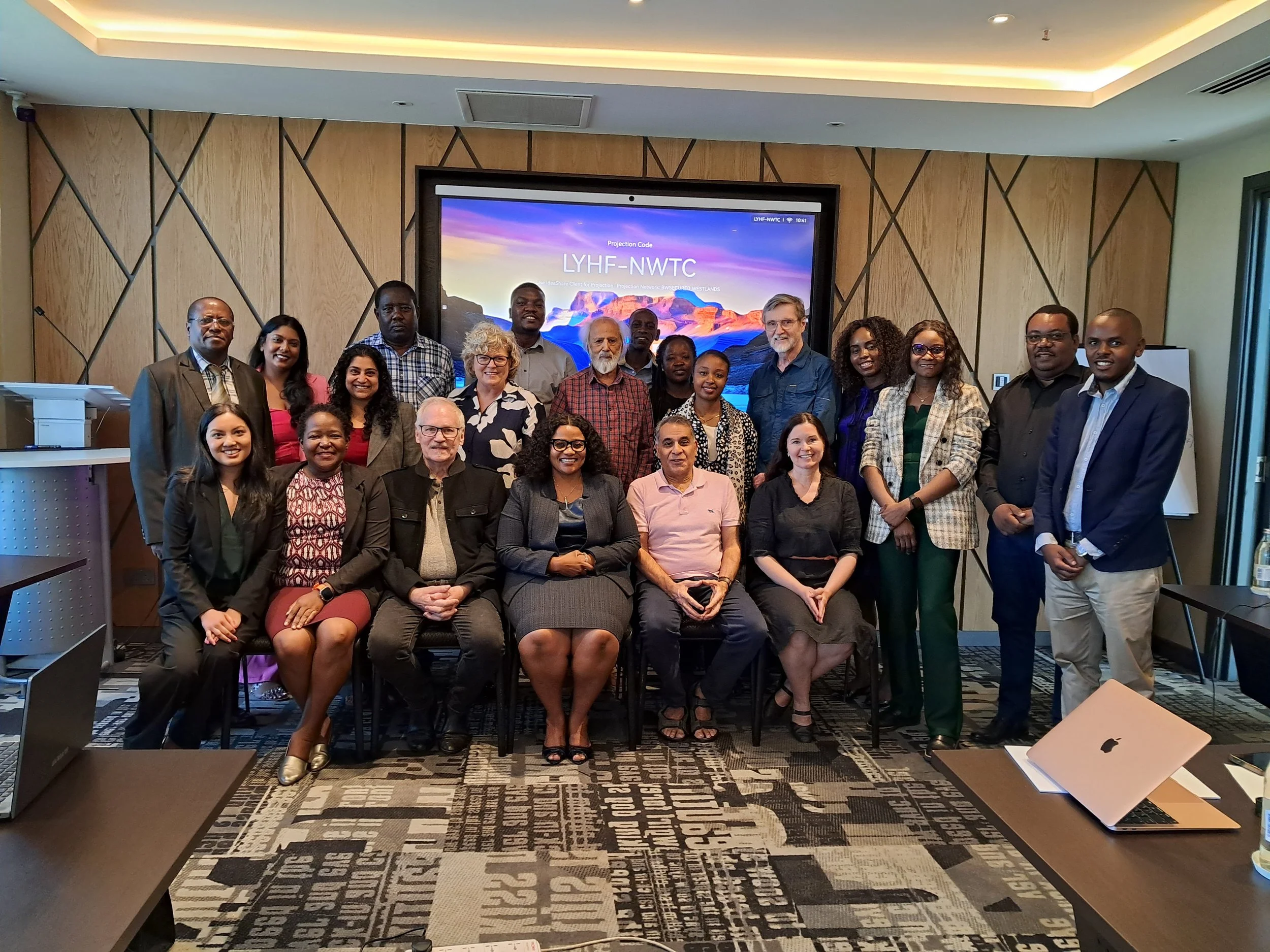
Mazingira Institute (MI) team pose for a photo with members of Project Steering Committee during the last meeting in February 2025
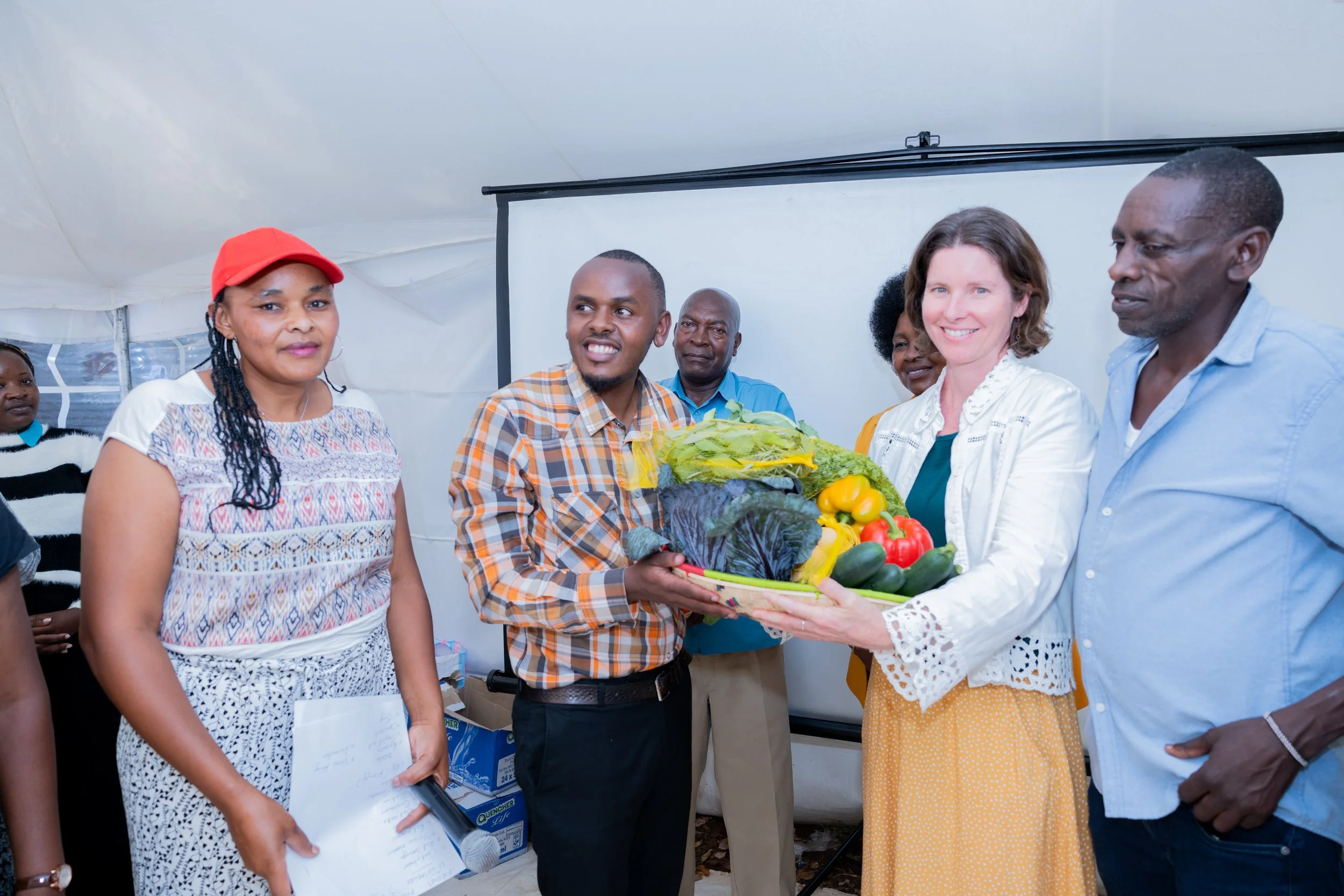
Sam Ikua, Project Coordinator at MI, hands a fruit basket to Pamela Gordon, Deputy Head of Cooperation Canadian High Commission in Kenya, at the NEFSALF forum held in February 2025
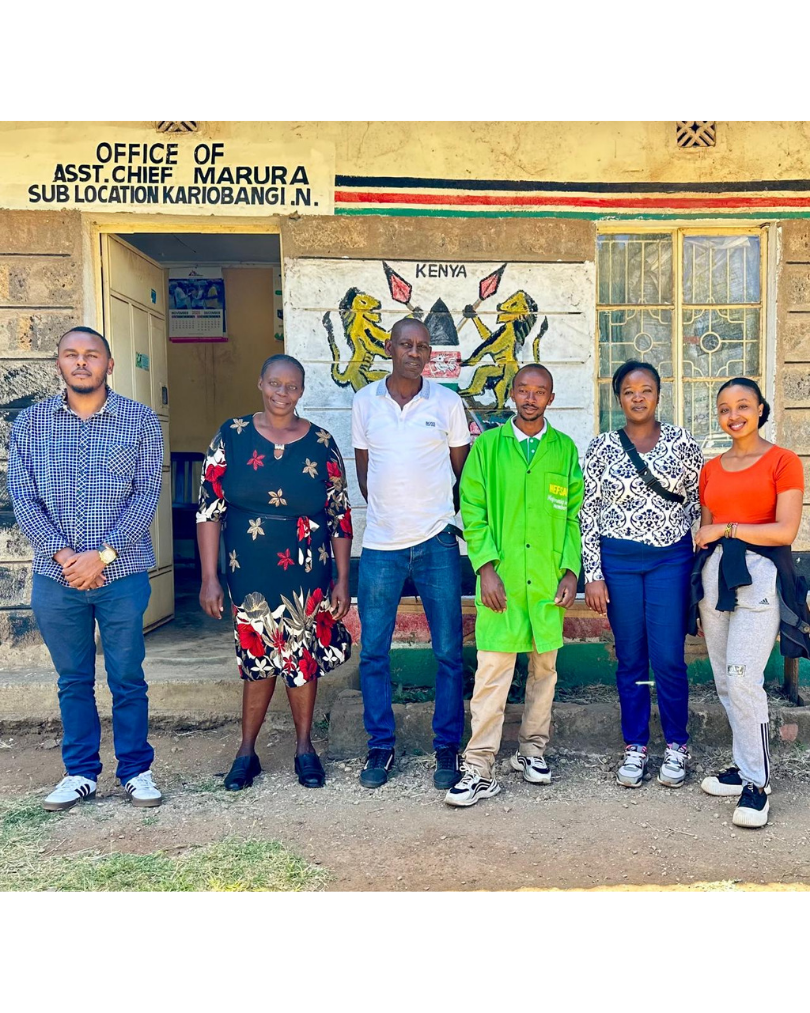
MI team field visit to Stephen Musyoka (fourth from the left), a Gender Urban Agriculture and Food System trainee, joined by Angeline Onyango, Senior Assistant Chief in Kariobangi North, Nairobi.